

Why Books About Nonverbal Autistic Children Matter
Books about nonverbal autistic children do more than fill a shelf. They give families a shared language for experiences that are hard to put into words, and they give nonverbal readers a chance to see themselves as the main character rather than a lesson.
That gap is real. A common experience among parents is scanning a bookstore or library display and finding plenty of stories about autism told from the outside, and very few told from the inside. Representation matters because it shapes how a child understands their own place in the world, and how siblings, classmates, and neighbors understand them too.
This guide walks through what makes a book genuinely useful for a nonverbal child, how to choose titles, and how to build a reading routine that meets a child where they are. The recommendations below span picture books and family stories, plus a novel for the grown-ups who love these children.
What Makes a Book Sensory-Friendly for Autism
Sensory-friendly books for autism are titles designed to reduce overwhelm and invite engagement, rather than demand it. That usually means simpler page layouts, calmer color palettes, fewer competing visual elements, and text that gives a child time to process.
Look for these features when browsing:
- Matte rather than glossy pages, which cut down on glare
- High-contrast but muted illustrations instead of busy, high-saturation spreads
- One clear focal point per page
- Sturdy board or thick paper stock for children who handle books roughly
- Rhythmic, repetitive text that supports receptive language without overwhelming it
A common mistake is assuming a sensory-friendly book has to be simple in content. It doesn't. It has to be simple in presentation. A story can carry real emotional weight while still leaving white space around the words.
Picture Books and Stories That Center Nonverbal Characters
Picture books remain the most accessible entry point, because they let a child engage through visual attention rather than spoken language. Here are titles and categories worth seeking out:
- Wordless and near-wordless picture books. These let a child co-author the story through pointing, signing, or vocalizing. The lack of text removes the pressure to follow a narrative they can't yet read.
- Stories with a nonverbal protagonist. Look for books where the main character communicates through gesture, AAC, or expression, and where that communication is treated as complete rather than deficient.
- Books by nonspeaking autistic authors. These carry a different kind of authority. When the author lives the experience, the details tend to ring true in ways outsiders miss.
- Social stories. Short, structured narratives that walk through a specific situation, like a trip to the dentist or meeting a new classmate, are useful for building predictability.
When evaluating any of these, ask one question: does the character have agency? A story where a nonverbal child is only acted upon, never acting, teaches the wrong lesson.
How to Read With a Nonverbal Child at Home
How to read with a nonverbal child comes down to following the child's lead instead of the plot. The goal isn't finishing the book. It's building joint attention and shared enjoyment, which are the foundations literacy development rests on.
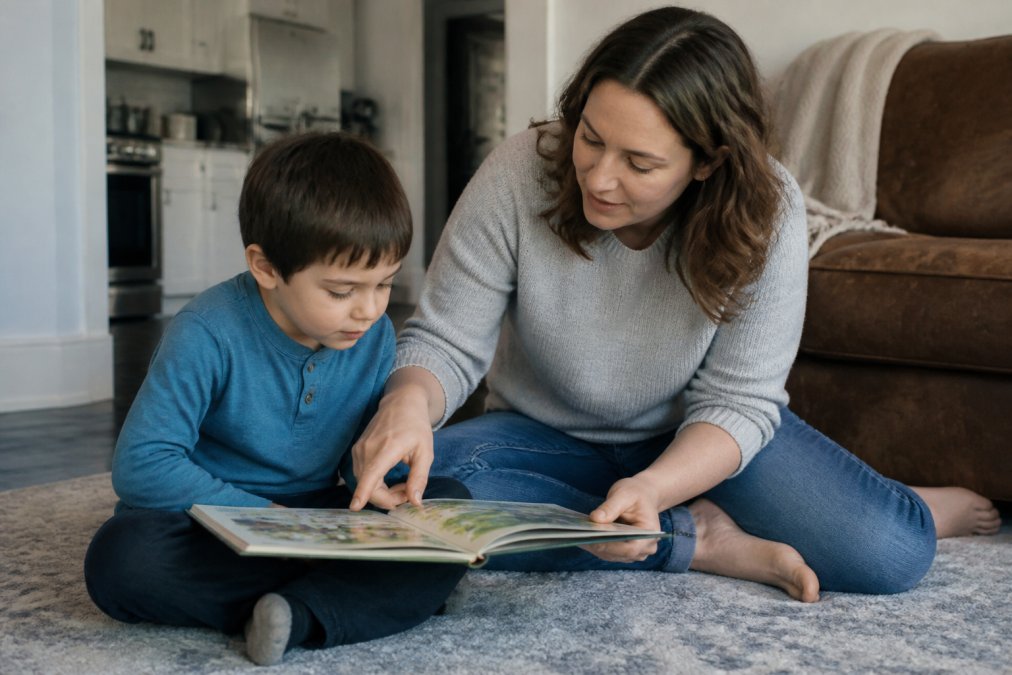
Practical techniques that work:
- Pause after each page and wait. Silence is an invitation, not a dead end.
- Point to pictures and name them, then wait again.
- Accept any response as communication: a glance, a reach, a sound, a shift in breathing.
- Let the child turn pages, even out of order.
- Read the same book repeatedly if they ask for it. Repetition builds reading comprehension long before it builds vocabulary.
AAC-integrated reading is one of the most underused strategies here. If a child uses an AAC device or picture symbols, load the book's key words onto it before you read. That way, the child can comment on the story rather than just receive it.
Why Music Works: We've Always Known This
There's a reason children learn the alphabet as a song. Music is one of the oldest and most natural ways humans learn, long before a child can read a letter, they can carry a tune that carries the letters for them. Rhythm and melody give language a shape the brain can hold onto, which is why a catchy song sticks when a flashcard doesn't.
For nonverbal and neurodivergent children, that same principle is a gift. Music offers a way into language that doesn't demand speech in return. And parents don't need to create any of it from scratch. Free resources make this easy to start at home:
- Ms Rachel and Jack Hartmann are two of the most widely used creators of educational children's music, with hundreds of songs and videos built around letters, sounds, counting, and movement. Their videos are free, endlessly repeatable, and designed for exactly the kind of engagement this guide is about.
- Pair a favorite video with the same book afterward, so the song and the story reinforce each other.
- Let repetition do its work. A child asking for the same song twenty times isn't stuck; they're learning.
Matching Music to the Child, Not the Book
The right amount of music is the amount a child can tolerate. A common pattern practitioners describe is that background sound helps some children filter out competing noise and overwhelms others. Watch for the difference between a child who is leaning in and a child who is shutting down.
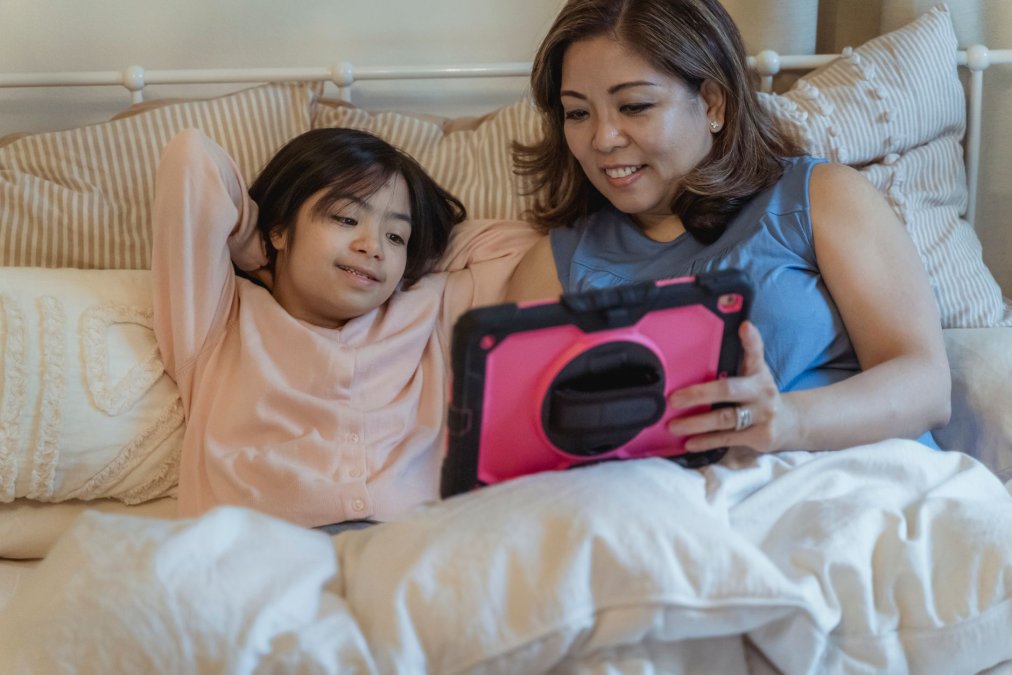
The goal is not to make reading musical. The goal is to give a nonverbal child one more way to say I'm here, I'm listening, keep going.
Books for Siblings and the Whole Family
Siblings need stories too, and often get overlooked. A brother or sister of a nonverbal autistic child is processing big feelings: protectiveness, jealousy, confusion, and love, sometimes all in the same afternoon. Books give those feelings somewhere to land.
What to Look For in a Sibling Book
- A sibling's point of view. Stories told from the brother's or sister's perspective let their mixed emotions be normal rather than something to apologize for.
- An autistic character with agency. The autistic sibling should want things, refuse things, and joke, not exist only to teach the neurotypical character a lesson.
- No caretaker framing. Watch for books where the sibling is quietly promoted to junior parent. That is a real dynamic in some families, but it is not the lesson a picture book should be reinforcing.
- Room for the sibling's own identity. The best titles let the brother or sister have a life, a hobby, and a bad day that has nothing to do with autism.
Reading Together as a Family
For grandparents, teachers, and extended family, the same titles work as conversation starters. Reading together gives everyone a shared reference point and a way to talk about neurodiversity-affirming ideas without it feeling like a lecture.
A practical pattern that works well: read the book once through without stopping, then go back and pause on two or three pages to ask open questions. What do you think she's feeling here? Have you ever felt like that? Keep the questions short and accept silence as an answer. For a nonverbal child in the room, the sibling conversation is also modeling, they are watching how the family talks about them.
A Standout Example, and the Advocates Behind Books Like It
Many of the best books in this space come from parents and autistic advocates who built an audience on social media before they ever published. These are often mothers of autistic children who started sharing their daily lives online, and who then turned that hard-won knowledge into books that get representation right from the inside.
A standout example is A Day With No Words by Tiffany Hammond, the autistic writer and advocate behind the Fidgets and Fries platform (@fidgets.and.fries on Instagram). The picture book follows a day in the life of her nonverbal son as he communicates with a tablet, and it's told from his own perspective, so the reader spends the story inside his experience rather than watching from outside. It's exactly the kind of book this guide points toward: a nonverbal child at the center of his own story, communication treated as complete, and no lesson forced onto him. It became a number one New York Times bestseller, which says something about how hungry families have been for stories like it.
When you're looking for books, these advocate-authors are worth following. They tend to know the titles worth reading, because many of them wrote those titles themselves.
A Book for the Grown-Ups: Where The Color of Silence Fits In
Everything above is about books for your child. This one is for you.
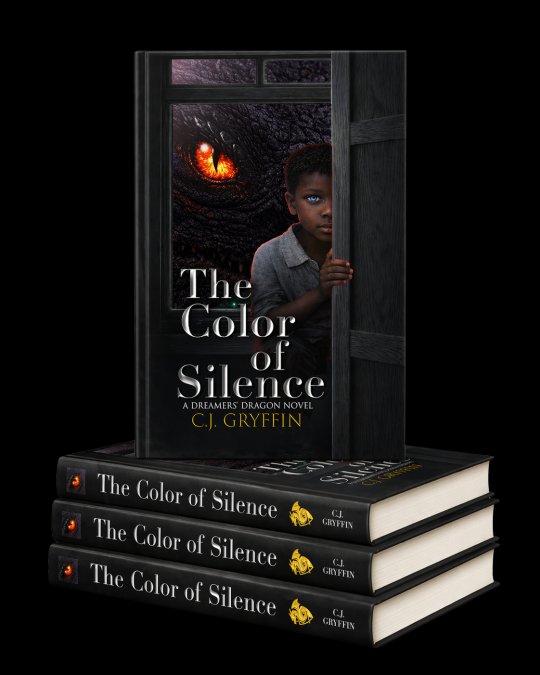
Some books explain autism. A few let the adult who lives it feel understood. The Color of Silence by CJ Gryffin is the second kind, and it's written for grown-up readers, the parents, educators, and family members who love a nonverbal child and rarely see that experience on a page.
It's upmarket historical fantasy for adults, not a picture book or a read-aloud. Set in 1930s Atlanta, it follows five-year-old Darius Turner, a nonverbal boy labeled broken by a world that doesn't know how to reach him, and his mother Sadie, who never stops trying. In the dream realm of Somnoria, Darius isn't damaged. He's destined. The novel puts a nonverbal child at the center of his own story as the hero, not a side character or a teaching tool, and it was written by an author with nearly a decade of experience as a special education teacher.
The novel pairs with a companion soundtrack, a deeply emotional score written to be heard alongside the story. It's available as a bundle with the book, and it's meant to deepen the atmosphere for an adult reader rather than serve as a reading aid. You can read in silence or let the music carry you through Somnoria.
|
Format |
Price |
Best For |
|---|---|---|
|
Paperback + soundtrack bundle |
$24.99 |
The full immersive experience, book and score together |
|
Hardcover + soundtrack bundle |
$34.99 |
A keepsake edition with the companion score |
One reader, a parent of a nonverbal child, put it plainly: "I felt every emotion Sadie carries. This story felt like it was written for me." That's who this book is for, the grown-ups who carry those emotions and rarely find them reflected back.
Readers can read the first chapter before buying, or listen to the soundtrack to get a feel for the atmosphere.