

Atmospheric Fantasy with a Musical Companion Means
Atmospheric fantasy with a musical companion is a reading experience in which a novel's mood, setting, and emotional arc are paired with original music written to accompany the story. CJ Gryffin, an author and special education teacher, built this approach into The Color of Silence, an upmarket historical fantasy novel set in 1930s Atlanta.

The concept is simple: the book stands alone, but a companion soundtrack gives readers a second way into the story's emotional landscape. The music is sold as a bundle with the book, not included free, and it is designed for the adult reader rather than as a reading aid for children.
How Music Influences Atmosphere in Fantasy Literature
Music influences atmosphere by setting emotional expectations before a scene is read. A minor-key motif signals grief; a rising phrase signals resolve. When the music was written for the book, those signals align with the author's intent instead of a stranger's mood board.
This is where atmospheric fantasy with a musical companion differs from a standard fantasy soundtracks playlist. A playlist is assembled; a companion is composed. The distinction shows up in pacing, in recurring thematic motifs, and in how silence is used.
The Psychology of Auditory Immersion
Auditory immersion works because sound and memory are closely linked. A repeated melody becomes a cue: hear it again, and the earlier scene returns with it. Readers who listen while reading often report stronger recall of emotional beats than of plot mechanics.
That is also why silence matters. A soundtrack that never rests leaves no room for a scene to land quietly.
Building an Immersive Reading Experience with Sound
An immersive reading experience with sound starts with intention, not volume. The goal is a room where the music sits under the prose rather than beside it.
Practical setup:
- Use over-ear headphones or a single small speaker, kept low
- Match the track to the chapter, not to your general taste
- Take one silent chapter per sitting to let the music settle
- Keep a bookmark in the soundtrack listing so you can find a motif again
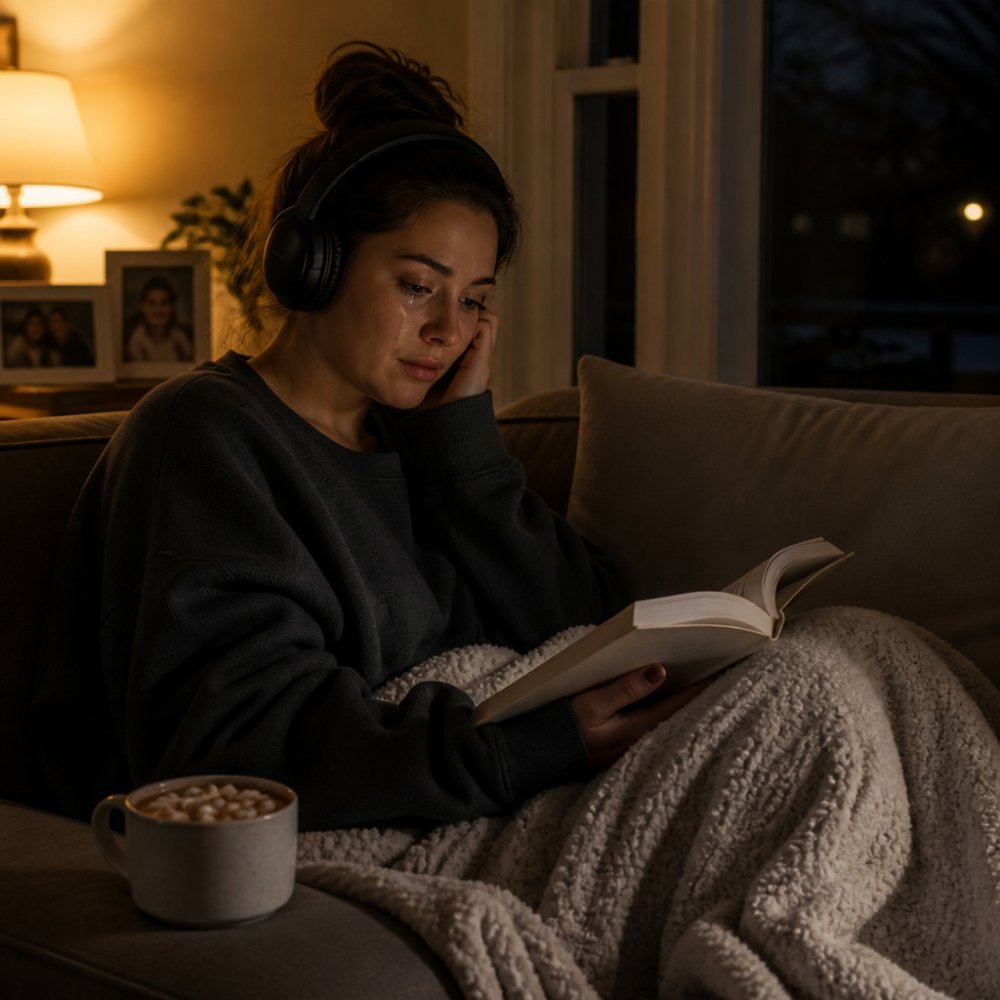
Readers new to this format often assume the music is a gimmick. In practice, the difference between a curated soundscape and a composed one is the difference between a mood and a memory.
The Color of Silence: A Musical Companion in Practice
The Color of Silence is an upmarket historical fantasy novel for adult readers, set in 1930s Atlanta. It follows Darius Turner, a nonverbal five-year-old, and his mother Sadie, in a story that moves between the waking world and a dream realm called Somnoria. It was written by CJ Gryffin, a special education teacher, and it comes with a companion soundtrack sold as a bundle with the book.
What makes it a useful example of this format is that the music was built for the story rather than selected to match a mood. The soundtrack is meant to sit alongside the reading, deepening the atmosphere for an adult reader rather than serving as a reading aid. A reader can move through the novel in silence or let the score carry the emotional weight of a scene. Either way works, which is the mark of a companion that supports the book instead of leaning on it.
Inside Somnoria: Sound and Silence in 1930s Atlanta
Somnoria is the dream realm at the center of the novel, the place where the judgments of the waking world fall away for Darius. A companion soundtrack suits a story like this because so much of it lives in what is not said. Darius is nonverbal, and the book carries his interior life through sensation and image rather than dialogue, which is exactly the kind of emotional register music can reinforce.
It works best when it respects silence. The pauses are part of the story, not gaps to fill. A score that never rests would flatten the quiet that gives a scene like Darius's room to breathe. Used with restraint, the music marks the shift between the hard waking world and the openness of Somnoria without ever announcing itself.
Conclusion: Matching the Right Soundtrack to the Right Story
The hard part of atmospheric fantasy with a musical companion is not finding music. It is finding music that belongs to one particular book. A composed companion, written in response to a story's scenes and silences, does something a general playlist cannot: it carries the author's intent instead of a stranger's mood.
For readers drawn to that kind of experience, The Color of Silence is one example of the format done deliberately, a historical fantasy with a nonverbal protagonist and a soundtrack built to sit beside it. Readers can read the first chapter or listen to the soundtrack before deciding whether the pairing is for them.
Frequently Asked Questions
How does music influence the atmosphere in fantasy literature?
A companion soundtrack sets tone before a scene is read, and it holds that tone between chapters. Ambient music and instrumental fantasy scores slow a reader's pace, which lets atmospheric fantasy land with more weight. The effect is strongest when the music mirrors the book's emotional arc rather than competing with it. Readers who pair sound with story often report staying inside the world longer after the last page.
Can a companion soundtrack improve reading comprehension?
It can support focus, though results vary by reader. Steady instrumental music without lyrics reduces background distraction for many people, and thematic motifs tied to specific characters or places help readers track who and where they are. For neurodivergent readers who find silence distracting, a soundtrack can act as a steady anchor. The soundtrack is not a reading aid for children; it is built for the adult reader's immersion.
Does atmospheric fantasy with a musical companion work for neurodivergent readers?
It often does, because sound gives a second channel into a story when text alone feels like a lot of work. A soundtrack can mark transitions, signal mood shifts, and offer a place to pause. The Color of Silence, set in 1930s Atlanta with a nonverbal protagonist named Darius Turner, was written by special education teacher CJ Gryffin, and its companion soundtrack was created as an immersive experience for adult readers rather than a teaching tool.